
Lately, I’ve been thinking about Santosha — contentment, as described in the Yoga Sutras of Patanjali. Not the kind of contentment that says “I don’t want more.” Not passive resignation. Rather, the kind that whispers: I am not at war …


Lately, I’ve been thinking about Santosha — contentment, as described in the Yoga Sutras of Patanjali. Not the kind of contentment that says “I don’t want more.” Not passive resignation. Rather, the kind that whispers: I am not at war …

How to Cultivate Presence Beyond the Yoga Mat Awareness is not something we add to life.It is something we remember. Most of the day, life moves through us automatically — habits, thoughts, reactions, routines. We eat, walk, speak, work, and …
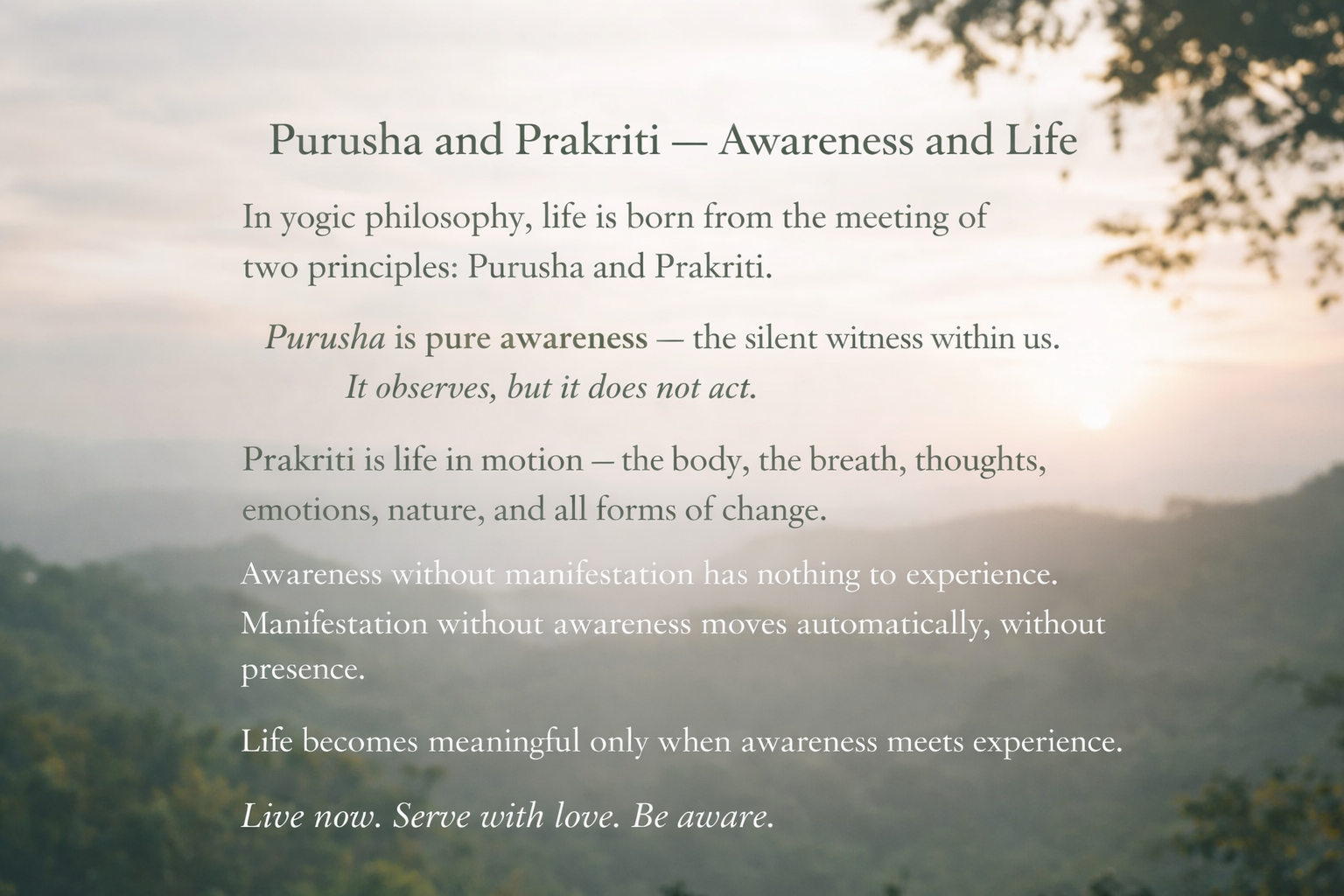
In yogic philosophy, life is born from the meeting of two principles: Purusha and Prakriti. Purusha is pure awareness — the silent witness within us.It observes, but it does not act. Prakriti is life in motion — the body, the …
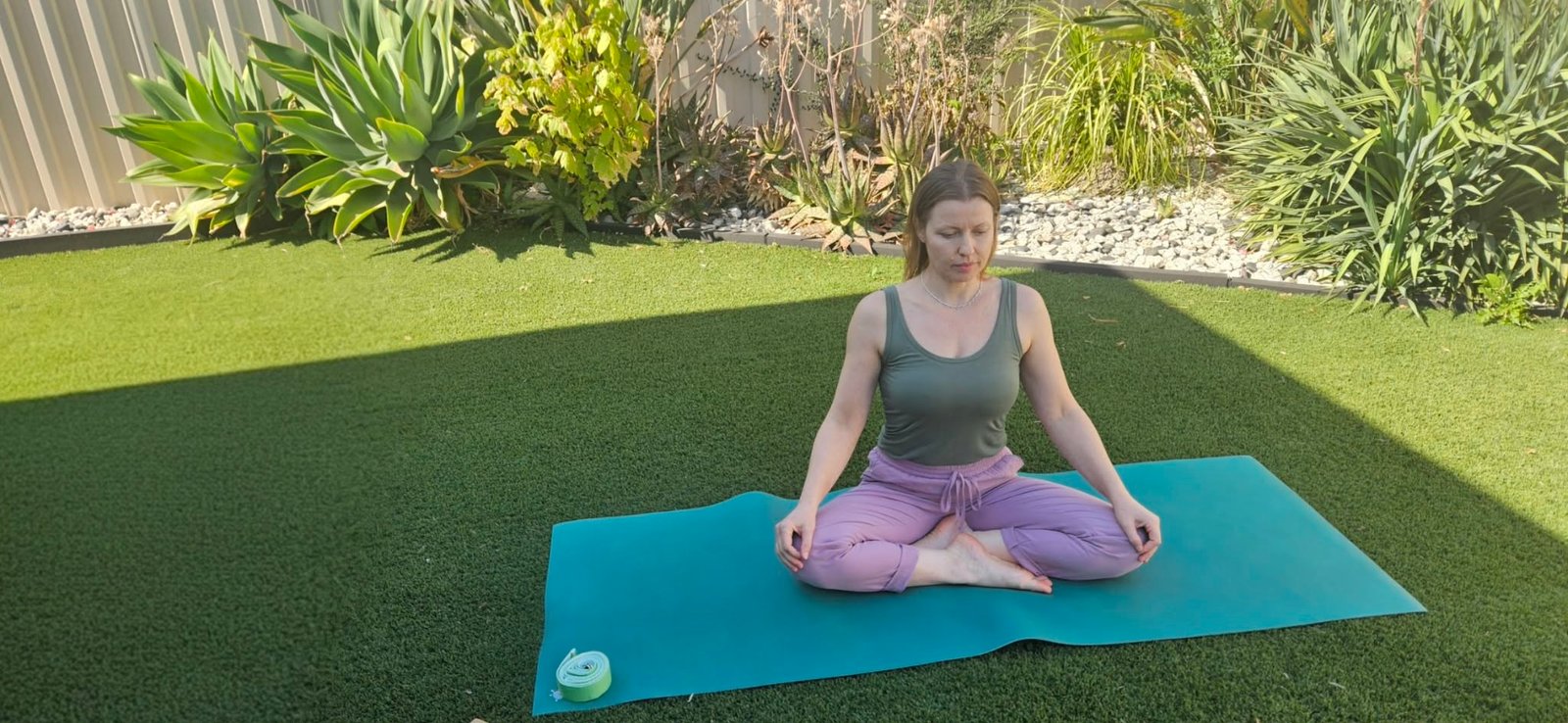
In real life, mindfulness is very simple. It’s not about being calm all the time.It’s not about stopping thoughts or doing something perfectly. It’s about noticing. In my own life, mindfulness means noticing when I’ve lost myself —in worries, emotions, …

For me, meditation has never been limited to sitting still on a cushion. It is about bringing presence into every moment of life — whether I am moving, standing, speaking, or listening. True meditation is a living practice, fully integrated …

What Anapanasati Means The word Anapanasati comes from the Pali language and is composed of two parts: Together, Anapanasati means mindfulness of breathing — the practice of consciously knowing each in-breath and each out-breath as they naturally occur. Rather than …

Reconnecting Modern Practice with Ancient Wisdom In today’s world, yoga is often approached as a way to become stronger, more flexible, or less stressed. While these benefits are real and valuable, they are only side effects of something much deeper.In …
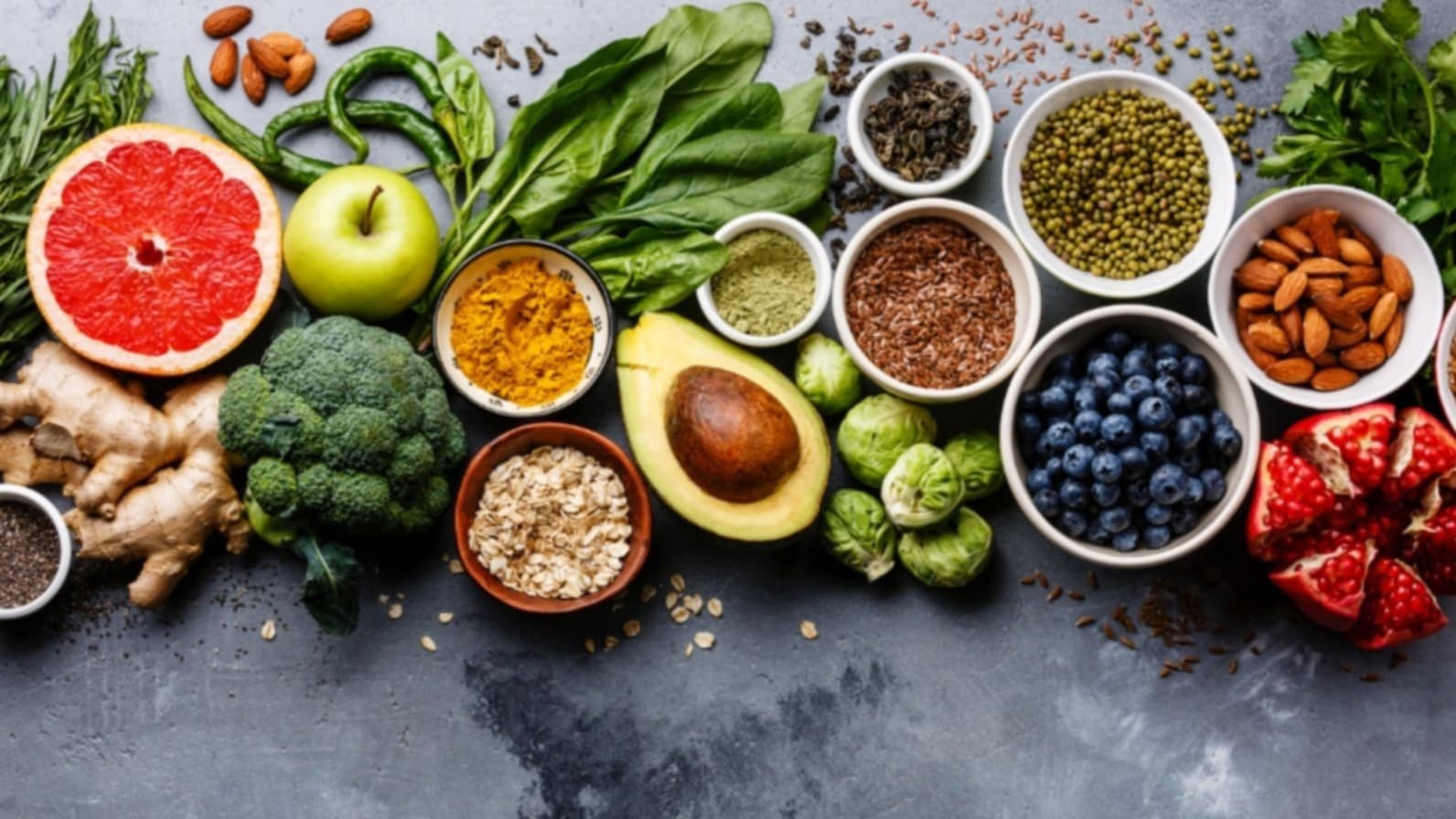
In Ayurveda and Yoga, food is not just fuel—it’s medicine for the body, mind, and spirit. The qualities of the food we eat can influence our energy, emotions, mental clarity, and spiritual awareness. Understanding the three gunas—sattva, rajas, and tamas—helps …

A yoga class is more than a sequence of postures—it’s an energetic container. The teacher becomes the guide who shapes the quality of that container. When the intention is to increase sattva guna—clarity, harmony, and inner light—the teacher’s presence, words, …

In Yoga and Ayurveda, the three gunas—sattva, rajas, and tamas—are considered the fundamental qualities of nature. They influence everything we experience: our thoughts, actions, energy levels, and even our spiritual clarity. By understanding the gunas, we gain a powerful framework …
Not a member yet? Register now
Are you a member? Login now