
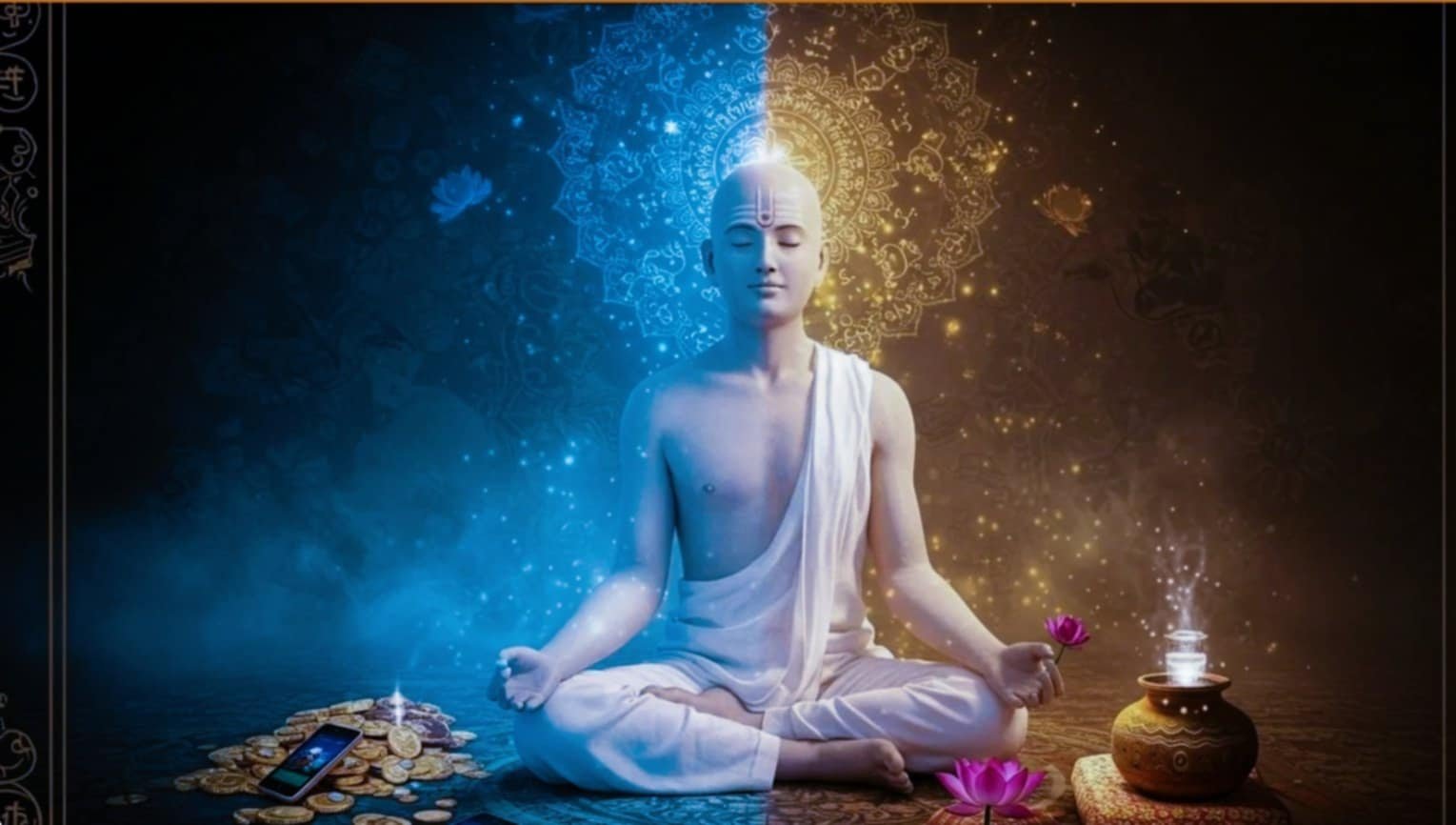
🍂 Aparigraha — The Freedom of Letting Go
In Patanjali’s Yoga Sutras (2.30), Aparigraha is the fifth and final Yama, following Ahimsa, Satya, Asteya, and Brahmacharya.
The Sanskrit word Aparigraha means “non-grasping,” “non-possessiveness,” or “non-attachment.”
At its heart, it invites us to live lightly — to release the constant need to own, control, or cling. Aparigraha teaches that freedom is found not in having more, but in needing less.
🌿 The Essence of Aparigraha
Graha means “to grasp” or “to seize,” and Aparigraha means “not grasping.”
When we cling — to possessions, relationships, identities, or expectations — our energy becomes trapped. When we let go, we return to the natural flow of life.
“When one is established in non-possessiveness, knowledge of the past, present, and future unfolds.”
— Yoga Sutra 2.39
This verse suggests that true clarity comes when we are free from attachment. Only an uncluttered heart can perceive truth as it is.
🌸 Living Aparigraha in Daily Life
1. With possessions:
Practice gratitude for what you have instead of chasing more. Buy mindfully, share freely, and release what no longer serves you. Simplicity creates spaciousness — both in your home and in your heart.
2. In relationships:
Let love be based on freedom, not fear or control. Trust that connection doesn’t require possession. To love without clinging is one of the highest forms of Ahimsa and Satya.
3. In the mind:
Aparigraha also means letting go of attachment to results, opinions, or self-images. On the mat, it’s releasing the desire to achieve or compare. True practice is not about the perfect pose but about presence and surrender.
When we stop holding on, life starts flowing. The less we grip, the more open we become to grace.
🍃 Aparigraha and Ayurveda
In Ayurveda, attachment and accumulation disturb the Kapha dosha, which governs stability and structure. When Kapha is imbalanced, we hold onto possessions, emotions, or memories long past their time.
Living Aparigraha harmonizes Kapha — it lightens the body, clears the mind, and rekindles inner fire.
- Vata finds balance by letting go of worry and trusting the flow.
- Pitta releases control and perfectionism.
- Kapha softens attachment by embracing change and movement.
Ayurveda reminds us that the rhythm of life is give and receive — inhaling, exhaling, holding, and releasing. Aparigraha aligns us with this rhythm, helping us live in peaceful balance with nature.
🪶 Sankalpa (Intention for Practice)
Take a deep breath and gently affirm:
“I let go of what no longer serves my growth.”
or
“I live with open hands and an open heart, trusting life’s flow.”
This intention helps release the fear that drives attachment and nurtures the peace that comes with trust.
🌼 Reflection Practice
Each day, take a quiet moment to ask:
“What am I holding onto — in my thoughts, my home, my heart?”
“Is it serving my growth, or weighing me down?”
Begin with something small: a belief, an item, or an expectation. With gratitude, let it go. Notice the lightness that follows.
✨ Closing Thought
Aparigraha is the art of letting go — not out of indifference, but out of faith. It’s the realization that nothing truly belongs to us, yet everything is given to us for a time.
When we loosen our grip, we receive life as it is — abundant, impermanent, and beautifully enough.
To live Aparigraha is to walk freely, carrying only what love and truth can hold.

You may also like


Vrittis: Choosing Your Inner Blueprint: Returning to Your True Self